Thursday – Renew Your Belief week 7

By  Jon Farmer

What do we believe? 

That the Lord’s Supper is to be observed as a remembrance on a regular basis until Jesus returns.

Why do we believe this?
Acts 2:42 – And they devoted themselves to the apostles’ teaching and the fellowship, to the breaking of bread and the prayers.

Why does it matter?
“Hey dad? Are they gonna have snack today in big church?”

My son asked me this question when he first starting sitting in services with my wife and I. He had heard us talk about the Lord’s Supper but, at four years old, didn’t have a full grasp of what it meant. I remember when I was young, I asked my dad a similar question. I knew we ate bread and drank juice during church, but I wanted to have a mini version of that experience with a loaf of sandwich bread and a big glass of grape juice at our kitchen table.

My dad explained to me the same thing that I told my son. He said “We don’t have communion at church because we’re hungry or thirsty for food. We have it to remember that we hunger and thirst for Jesus.”

That hunger has always stayed with me. Each time that we gather for the Lord’s Supper, I am reminded through the bread that without the breaking of Jesus’ body, I would hunger for God forever. I realize as I drink the juice that without the shedding of His blood, I would be like the rich man in Luke 16, thirsting for His presence for eternity.

When Jesus returns, we will hunger and thirst no more. Until then, may we always be reminded of His great sacrifice through the Lord’s Supper.
Wednesday – Renew Your Belief week 7

By Matt Haste

What do we believe?

We believe that the Lord’s Supper is given to believers to commemorate the death of Jesus Christ and to anticipate His glorious return.

Why do we believe this?

1 Corinthians 10:16-22 – The cup of blessing that we bless, is it not a participation in the blood of Christ? The bread that we break, is it not a participation in the body of Christ? Because there is one bread, we who are many are one body, for we all partake of the one bread. Consider the people of Israel: are not those who eat the sacrifices participants in the altar? What do I imply then? That food offered to idols is anything, or that an idol is anything? No, I imply that what pagans sacrifice they offer to demons and not to God. I do not want you to be participants with demons. You cannot drink the cup of the Lord and the cup of demons. You cannot partake of the table of the Lord and the table of demons. Shall we provoke the Lord to jealousy? Are we stronger than he?

Why does it matter?

Our church celebrates the Lord’s Supper on a regular basis because it is one of the primary means that God has given to us to commemorate the death of Christ and consider its implications for our life. 1 Corinthians 10 reminds us that what we celebrate reveals our allegiance.

In first-century Corinth, the church was surrounded by pagans who made food offerings to their false gods. Because these gods were mere idols, the food was unconsumed and the leftovers were routinely eaten afterwards. Paul’s point in this passage is that Christians ought not to eat this food because those who do are “participants with demons” (v20). He is not so much saying that “you are what you eat” but rather, “you become what you celebrate.” Paul’s concern was that eating food offered to idols during pagan celebrations would confuse Christians and muddy their allegiance. To put it another way, he didn’t want the church to waste its celebration on anything less than Jesus.

When we take the Lord’s Supper, we celebrate his death and declare our allegiance to His glory. This passage reminds us that we must be careful what we celebrate in life. Do you think of the Lord’s Supper as a celebration of what Jesus has done? Are there other things you celebrate more than your salvation?


Tuesday – Renew Your Faith week 7

By Dan Edmonson (Church Administrator)

What do we believe?

We believe that the Lord’s Supper is given to believers to commemorate the death of Jesus Christ and to anticipate His glorious return.

Why do we believe this?

1 Corinthians 11:23-26 – For I received from the Lord what I also delivered to you, that the Lord Jesus on the night when he was betrayed took bread, and when he had given thanks, he broke it, and said, “This is my body which is for you. Do this in remembrance of me.” In the same way also he took the cup, after supper, saying, “This cup is the new covenant in my blood. Do this, as often as you drink it, in remembrance of me.” For as often as you eat this bread and drink the cup, you proclaim the Lord’s death until he comes.

Why does it matter?

One of the keys to rejoicing in the Lord’s Supper is the final part of today’s scripture. As often as we do it we are proclaiming the Lord’s death until He comes. Scripture is very clear that the Lord’s Supper is a way for us as believers to stop and think about the death of our Savior. To reflect on what He really accomplished for us individually on the cross. It is important to not think of this in a corporate way but to truly reflect on it individually. I have recently taken some time to reflect on this thought. If God took my body and wrung every ounce of sin out of it what He might have left would be something the size of the wafer, that helps me see how sinful I truly am and how great He truly is. It brings me perspective and then I remember the final part of today’s scripture and I am filled with joy anew. Why? It doesn’t say, “Do this in case He comes again;” it says, “Do this until He comes again.” He is coming. He has risen and He does love us. The Lord’s Supper is given to us to remind us of the whole of His work on the cross. Wow. Pray today that God sparks a joy anew as you reflect on His word, His wonderful work on the cross and His promised coming again.

Monday – Renew Your Belief week 7

By Bill Starr (Elder)

What do we believe?

We believe that the Lord’s Supper is given to believers to commemorate the death of Jesus Christ and to anticipate His glorious return.

Why do we believe this?

Matthew 26:26-29 – Now as they were eating, Jesus took bread, and after blessing it broke it and gave it to the disciples, and said, “Take, eat; this is my body.” And he took a cup, and when he had given thanks he gave it to them, saying, “Drink of it, all of you, for this is my blood of the covenant, which is poured out for many for the forgiveness of sins. I tell you I will not drink again of this fruit of the vine until that day when I drink it new with you in my Father’s kingdom.”

Why does it matter?

Jesus established a sacred worship practice – a sacrament – that would center the Christian faith upon his atoning death and unite believers in their communion with him during the long years between his death and his second coming.

Christ’s words here in this text establish the basic pattern for the supper, namely the use of bread to signify his body and wine to signify his blood. As these are respectively broken and poured, they give testimony to Christ’s sacrificial death on the cross. Paul teaches us in I Corinthians 11:26 that this is to be a perpetual observance until the return of Christ.

The parallels with the Jewish Passover are striking. Remember that the first observance of the Lord’s Supper is on that Thursday night before the crucifixion on Friday, when Jesus and his disciples were celebrating the Passover meal in the upper room. God established the Passover as a memorial to Israel’s exodus deliverance from Egypt. God had told them that when the angel of death came over the land of Egypt, that those who had slaughtered a lamb and spread its blood on the sides and tops of the doorframes would have the angel of death “pass over” their house and all who were “under the blood” would be spared.  The blood would redeem them from God’s wrath. During the Passover meal there are 4 cups of wine that are consumed. The third cup is the cup of redemption which symbolizes the blood of the Passover lamb and this is the cup Jesus is offering when he utters the words in our text.  He is letting the disciples know that He is the final Passover lamb and His impending sacrifice is to be memorialized by all His followers from this time forward.

The elements of the bread and wine together signify Christ’s death for us as an atonement for sin. The atoning death of Christ is at the very center of the Christian faith and the Lord’s Supper is a memorial to remind us that our salvation is dependent upon the finished work of Christ that he accomplished on the cross. As we participate, we are celebrating what Jesus has done for us and we are professing our faith in Christ our Savior and our allegiance to Him as our King.

Give thanks to God for what He has done through Jesus.

Update from West Africa

The Last Day

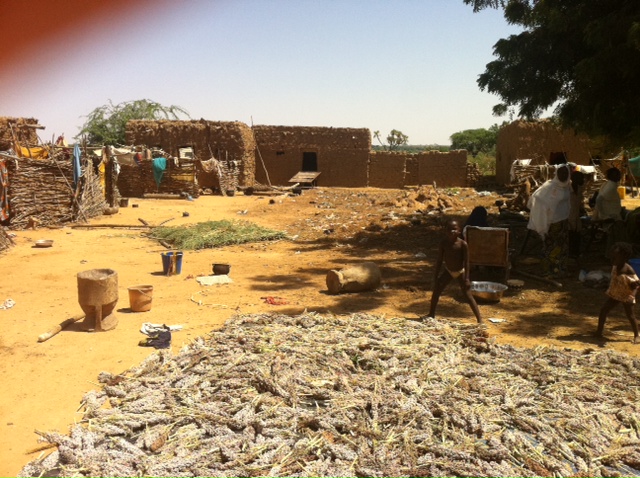
“Our last day here on the field in Africa we spent our time in the villages of “K1” and “K2”.  We headed out this morning for a short drive.  Along the way we had the opportunity to experience a ferry boat ride in getting over to these villages.  As Mark would say, another item to check off the Africa to do list. 


It was certainly interesting to say the least.  When arriving in “K1” we had the opportunity to be greeted by “I” at his compound.  He is the ONLY believer in this village.  To be able to spend more quality time with him, we went out to the field to help him out him some farming.    


As we were finishing and walking back to the truck, another guy walked up and started talking with us.  This turned out to be his brother.  So during our time of discipleship with “I” we had the chance to share the gospel with his brother.  He seemed very receptive but wasn’t ready to make a commitment either way.  Although, one interesting point was after he finished praying in Arabic, Cephas asked him if he knew what he just prayed.  His answer was NO.  This certainly proves that most of the Songhai truly believe in a Folk Islam and they don’t actually communicate with God, they just repeat prayers. Pray that God will continue to work in this man’s life.  We felt like he showed up there for a reason, so we remained hopeful at the same time. 


After taking a short break for lunch, we headed on over to “K2”.  We were going there just to stop by and encourage the only believer in this village.  When we arrived, “D” greeted us and you could instantly tell he was very excited to see us.  He invited us into his compound and while there we had the opportunity to pray with him about his son.  


He has not had any contact with his son in close to 2 years and he is very concerned about him.  He feels like he has spent a lot of time and money searching for him and at this point would just like to know if he’s even alive. We shared with him Proverbs 3: 5-6 and just encouraged him to trust in the Lord with this situation.  Lastly he let us know that the next time Mark and a team come to the village, he wanted to know so that he could gather some other people around.  These are people that he feels like are very interested in the gospel and could make a decision.  How great this was to hear about such a wonderful opportunity to share the gospel. 


Tomorrow will be basically a debriefing day along with one more to do list item…going to see the giraffes.  Also, Please pray for safety as we start our travel back home to our families.”  

Blake

Prayers for Saturday

Please lift these prayer requests up to the Lord.

Keith is having an upcoming carpal tunnel surgery.

Jim’s in-laws do not know Christ.

Salvation requests: Charles, Staci, Sam, Drew, Kristen, Kyle, Bob, Steve, BJ, Matt, Frank, Lenny, Mitchell, Dennis, Joseph, Ron, Tyler, Missy, Joe, Meadow, Joe, and Drew

North Warren County

Sean lost his wife in a car accident.  May he embrace Christ during this time of loss.

Andrew is recovering from surgery.

Logan needs the right words to share Christ.


Friday – Renew Your Belief week 6

By Dan Edmonson (Church Administrator)

What do we believe?

Baptism is immersion into water following a personal profession of faith in Jesus Christ done in response to the grace of God. It is a prerequisite to the privileges of membership at Living Hope Baptist Church.

 Why do we believe this?

1 Corinthians 1:13-17 – Is Christ divided? Was Paul crucified for you? Or were you baptized in the name of Paul? I thank God that I baptized none of you except Crispus and Gaius, so that no one may say that you were baptized in my name. (I did baptize also the household of Stephanas. Beyond that, I do not know whether I baptized anyone else.) For Christ did not send me to baptize but to preach the gospel, and not with words of eloquent wisdom, lest the cross of Christ be emptied of its power.

 Why does it matter?

To really understand this prerequisite we must understand the biblical meaning of faith. It is an action; it leads to actions born out of our love for Christ and what He has done for us. When we capture that thought and apply it into our lives we will in essence be yielding to the authority of the Holy Spirit. The spirit will guide us and direct us into proper responses in all areas of our lives. This is vital in our walk as we know that Satan is prowling around looking for whom he may devour. This yielding will also lead to a natural desire of obedience to God’s word and to the symbolic action of baptism. That visible act of submission/obedience (baptism) allows us to profess publicly to others what Christ has done for us and is an awesome picture that we can always reflect on that will show us the power of His grace. Pray today that God works in your heart in an even greater way to lead you to submission to His Spirit and a closer, more defined walk with Him.

Update from West Africa

Breakfast, Baptisms and New Brothers & Sisters!

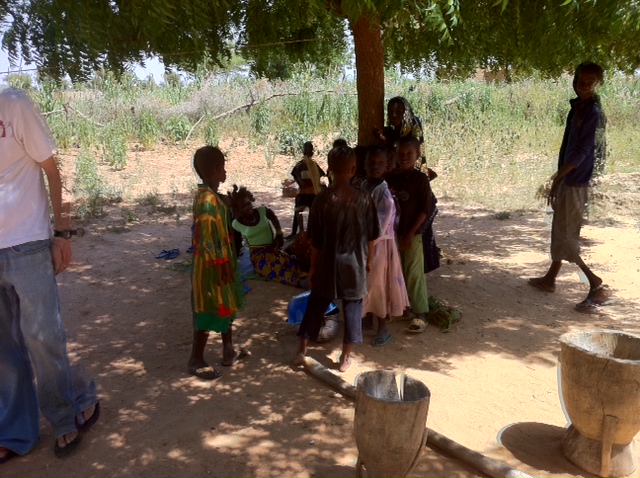
” Our time in Ayorou has come to an end.  We started the day by having breakfast in the village market.  I had no idea what to expect here, but we had omelets which were good and it was an interesting experience. Children would gather around us as we ate, waiting for left overs from our meal.
 It was humbling.  


After breakfast, we went down to the river and baptized two young men that are new believers.  This was great to see these guys make their public profession of faith before their other brothers.  Please pray for “Z”‘s family to accept them and his new faith in Christ.  He was fearful that his father would cast him out from the family.  Although, he was fearful of this, he still wanted to proceed with baptism!


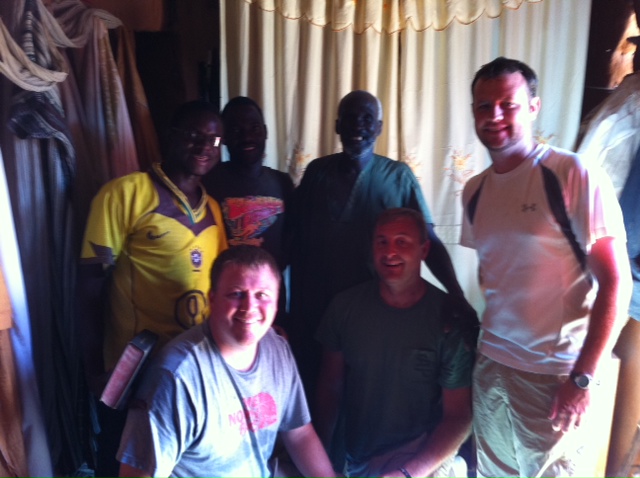
Later in the morning two of the three ladies from yesterday returned to be baptized.  We loaded the truck back up again and headed down to the river.  This time *Abe* had the honor of baptizing his new sisters in Christ.  Neither of these women were married which Mark and Cephus said was out of the ordinary.  Most women believers are married.  On both occasions we took several pictures with our new brothers and sisters in Christ to celebrate along with them.  


Before we left for the day, we spent more time with our brothers encouraging them in their faith and letting them know how much we appreciated our time in the village with them.  It is truly amazing to see them share their faith and also their dedication in serving the Lord everyday.”


Blake 

Thursday – Renew Your Belief week 6

By Todd Crosby (Deacon)

What do we believe?
Baptism is immersion into water following a personal profession of faith in Jesus Christ done in response to the grace of God.

Why do we believe this?

Acts 8:35-38 – Then Philip opened his mouth, and beginning with this Scripture he told him the good news about Jesus. And as they were going along the road they came to some water, and the eunuch said, “See, here is water! What prevents me from being baptized?” And he commanded the chariot to stop, and they both went down into the water, Philip and the eunuch, and he baptized him.

Why does it matter?

What should prevent anyone from being baptized or who should be baptized? These were some of the important questions being asked during the Protestant Reformation. At that time, there were three parties involved. There was the Roman Catholic Church, the magisterial reformers such as Martin Luther, John Calvin, John Knox, Ulrich Zwingli, and a third group called the radical (root) reformers.  These radical reformers were also known as the Anabaptists (“again baptizers”). From this group came the Mennonites and the Amish. We Baptists are a hybrid of the second and third groups. One thing we have in common with the Anabaptist is their belief in believer’s baptism. They believed that the root of the problem was the union of the church and the state, which led to the law stating that infants were to be baptized. They were breaking that law by re-baptizing people whom had already been baptized. They believed in a church of believers who were only baptized after making a believable profession of faith. Many Anabaptists were martyred for this belief by being drowned, a way of mocking their position.

The question still remains who should be baptized? As always we should look no further than our source of authority, Holy Scripture. In the Bible the only people we see being baptized are people like the Ethiopian eunuch, the people at Pentecost (Acts 2:41), the people Phillip evangelized in Samaria (Acts 8:12), Paul (Acts 9:18), Lydia (Acts 16:15), and etc. To summarize, we see only people who have made a believable profession of faith being baptized. These are the ones to whom the ordinance of baptism should be applied.  What is also interesting within the pages of scripture is that of all the people who did make a profession of faith, all followed through with baptism. You will not read of any unbaptized believers.

Two important questions are worth pondering as you consider this doctrine today. What are some dangers in applying baptism to someone who has not made a believable profession of faith? If you have made a profession of faith and are truly saved then what is stopping you from being baptized?